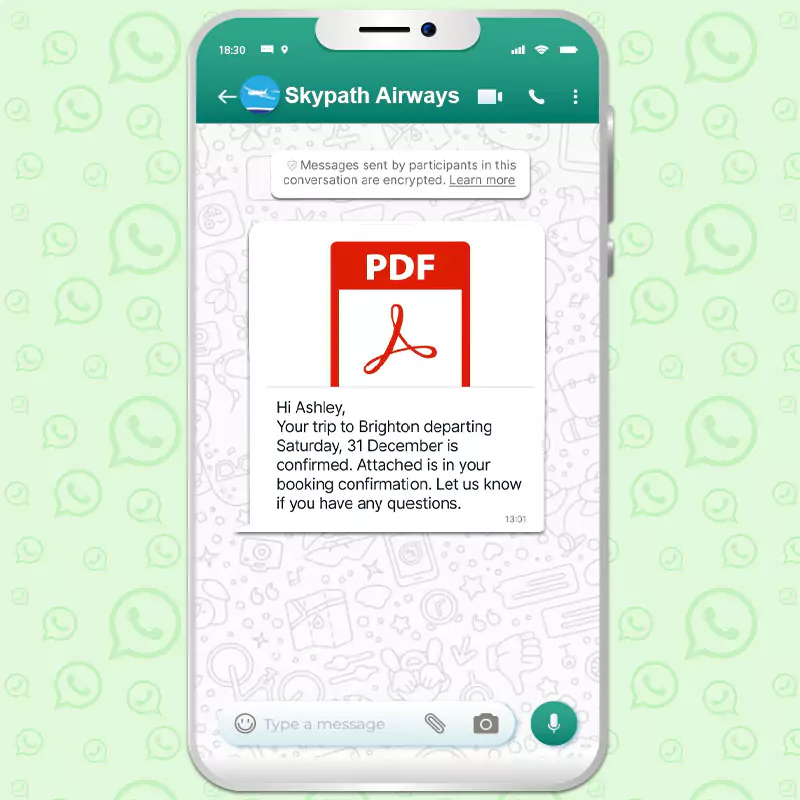
In the present digital world, clear and timely correspondence is the key. It helps in areas of strength for customer relationships. This is where value-based information comes in.
They’re automated messages sent straightforwardly to customers following their activities or account activity. These messages deliver basic data, confirmations and updates that keep customers informed and engaged.
Understanding transactional messaging is fundamental for organizations since it cultivates trust and straightforwardness. By giving applicable data with flawless timing, you can:
Reduce Customer Frustration: Clear updates on orders, appointments, or account changes keep clients in the know. Consequently, it keeps away from disarray.
Boost Customer Satisfaction: Convenient correspondence exhibits that you respect their business and keeps them informed.
Increase Engagement: Transactional messages can be a springboard for additional collaboration. It can incite item audits or present customized suggestions.
Imagine you’re shopping on the web and hit that ““confirm order” button. A load of vulnerability could get comfortable – did the request go through? When will it show up? Transactional messages are the rangers here. It rides in to clear up any disarray and keep you informed.
In technical terms, transactional messages are automated communications. It gets set off by a client’s activity or account action. They deliver fundamental data straightforwardly to the client. In this manner, going about as a digital handshake all through their excursion with your business.
Order Confirmations: These messages give quick consolation that your buy went through and detail what you requested. It likewise gives assessed delivery timelines and tracking information.
Account Notifications: These messages keep you updated on your account activity. It gives data about effective logins, password changes, or low balance alerts.
Password Resets: On the off chance that you at any point forget your login data, a transactional message containing a secure reset link ensures you can regain access quickly.
Shipping Updates: These messages track your order’s progress. It informs you when it ships, arrives at a delivery hub, and is finally out for delivery.
Appointment Confirmations: These messages provide reminders and details about upcoming appointments. It includes the date, time, location & even the name of the person you’ll be meeting.
In customer communication, transactional messages assume a significant part. It helps in building trust and cultivating positive encounters. This is the way:
Clarity and Transparency: They give clear and timely updates. Along these lines, keeping clients informed about their orders, accounts and interactions with your business. This reduces confusion and frustration.
Enhanced Customer Satisfaction: Getting important data brilliantly exhibits that you respect their business and keeps them in the know. This straightforwardness fabricates trust and fulfillment.
Improved Customer Experience: Transactional messages can go past fundamental updates. They can be customized with significant gives or item proposals. In this manner, prompting a seriously captivating client experience.
Transactional messages come in different forms, each serving a specific purpose in the customer’s journey.
Let’s Explore Some of the Most Common Types:
Reason: These messages go about as a receipt and confirmation for online purchases. They give peace of mind and key details like order number, purchased items, total amount, and estimated delivery date.
Example: “Hello [Customer Name], thanks for your order from [Company Name]! Your order number is [order number]. We’ve accepted your payment for [items purchased] and the order is now being processed. You can expect delivery within [estimated timeframe].”
Reason: These messages keep customers informed about their account activity. This could remember updates on low account balance, successful bill payments, security changes, or subscription renewals.
Example: “[Company Name] Alert: Your account balance is now below [amount]. To avoid service interruptions, please consider topping up your account soon.”
Reason: When a customer fails to remember their password, these messages provide a secure way to reset it. They typically include a one-time code or link that allows the customer to create a new password.
Example: “We received a request to reset your password for your [Company Name] account. Here’s your one-time code: [code]. This code is valid for 15 minutes. Please enter it on the password reset page.”
Reason: These messages keep customers informed about the status regarding their orders. They frequently incorporate tracking information, estimated delivery windows, and any potential delays.
Example: “Your order from [Company Name] is on its way! Track your package here: [tracking link]. Estimated delivery is [date].”
Reason: These messages help businesses reduce no-shows by reminding customers about upcoming appointments. They may include details like appointment time, location, and the contact person.
Example: “Friendly reminder! You have an upcoming appointment with [Doctor Name] at [Company Name] on [date] at [time]. We look forward to seeing you!”
Reason: These messages make a positive first impression after a customer sign up for a service or creates an account. They frequently incorporate a brief company introduction, next steps & helpful resources.
Example: “Welcome to the [Company Name] family, [Customer Name]! We’re thrilled to have you on board. As a new member, you can explore our resources here: [link to resources]. If you have any questions, don’t hesitate to contact us.”
Exploring correspondence with clients requires understanding the qualification between transactional & promotional messages. Both are valuable tools & they serve distinct purposes and adhere to different regulations.
Promotional are tied in with marketing & sales. Their essential objective is to create interest in products, services, or special offers. They could incorporate discount codes, announce new product launches, or promote upcoming events.
Transactional messages, center around giving fundamental data and updates straightforwardly connected with a client’s activities or record movement. They are set off by unambiguous occasions, for example, a buy, account change, or appointment booking.
Transactional messages serve a basic capability in cultivating trust and straightforwardness with customers. To accomplish this, they should exemplify a few vital qualities:
Reliability: Customers rely upon getting these messages reliably and without errors. This requires a hearty informing stage that guarantees messages are conveyed effectively.
Timeliness: The data passed on in transactional messages is in many cases time touchy. For example, an order confirmation email should be conveyed speedily after purchase. Likewise, a transportation update ought to show up before the bundle is conveyed.
Relevance: The message content ought to be directly relevant to the specific customer action or account activity that triggered it. Clients would rather not get conventional messages that don’t relate to their circumstance.
Organizations are continually looking for ways of enhance customer experience and drive commitment. Transactional messages offer a strong arrangement, conveying an abundance of benefits:
Enhanced Customer Experience: Clear and timely correspondence encourages trust and straightforwardness. Transactional messages keep clients informed about their orders, appointments, and account activity. Thus, reducing confusion and frustration.
Boosted Customer Engagement: These messages go about as contact focuses all through the customer journey. They can be utilized to provoke product reviews, offer personalized recommendations. It also provides helpful resources, leading to increased customer engagement.
Improved Conversion Rates: Transactional messages can be decisively used to poke customers towards wanted activities. For example, a shipping confirmation email might include a call to action to “Shop similar items” or “Leave a review.” This can lead to higher conversion rates and increased sales.
Higher Open Rates: Compared to promotional emails, transactional messages support altogether higher open rates. Customers expect and value these messages. Accordingly, making them bound to be opened and perused.
Cost-Effective Communication: Transactional messages are in many cases more financially savvy than conventional specialized techniques like calls or printed mail. They can be robotized and sent at scale, diminishing functional expenses.
Increased Operational Efficiency: By automating communication tasks, transactional messages free up staff time & resources for other business-critical activities.
Beyond these core benefits, transactional messages can also play a role in:
Reduced Cart Abandonment: Timely order confirmations and abandoned cart reminders can help recover lost sales.
Improved Customer Retention: By keeping customers informed and engaged, businesses can foster loyalty and reduce churn.
Enhanced Brand Reputation: Positive customer experiences fueled by clear communication contribute to a stronger brand reputation.
Transactional messages act as an essential touchpoint between a brand and its customers. They give essential data and support customer engagement by delivering personalized and relevant content.
At the point when done well, these messages can have a positive impression and improve the brand-customer relationship. Nonetheless, neglecting to send transactional messages can have severe consequences.
By failing to give timely and informative communications, brands risk harming the trust and dedication they have endeavored to work with their customers.
As a brand, you should focus on sending functional messages immediately and really to maintain consumer loyalty and commitment.